










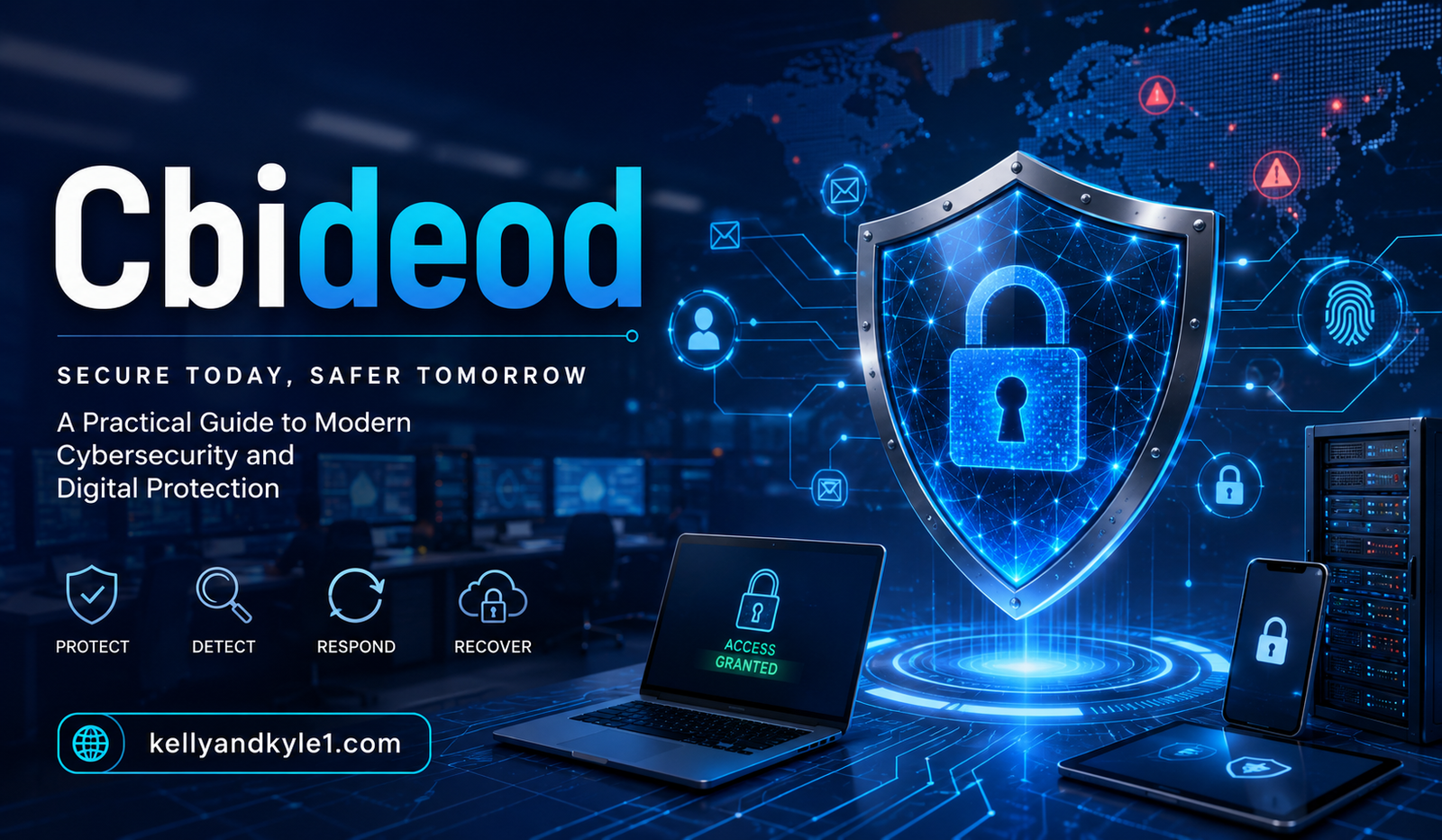
Cbideod can be described as a cybersecurity-focused methodology designed to improve digital protection through multiple layers of security controls, threat intelligence, continuous monitoring, and user awareness.
Rather than relying on a single security solution, cbideod promotes a defense-in-depth strategy where different security technologies work together to reduce cyber risks.
Core objectives include:
- Protecting sensitive information
- Preventing unauthorized access
- Detecting cyber threats early
- Responding quickly to security incidents
- Improving long-term cyber resilience
This approach recognizes that cybersecurity is not just about software. It also depends on people, processes, policies, and ongoing education.
Why Cybersecurity Matters More Than Ever
The digital economy continues to grow rapidly. Businesses store customer information online, employees work remotely, and cloud computing has become standard across many industries.
Unfortunately, cybercriminals have evolved just as quickly.
Common risks include:
- Financial fraud
- Data theft
- Business disruption
- Identity theft
- Intellectual property loss
- Reputation damage
A single successful attack can cost organizations millions of dollars while damaging customer trust for years.
This is why proactive cybersecurity strategies like cbideod have become increasingly valuable.
The Core Principles Behind Cbideod
Prevention
Strong security begins with prevention.
Organizations should:
- Use strong authentication
- Secure endpoints
- Apply software updates promptly
- Encrypt sensitive information
Preventing attacks is always more cost-effective than recovering from them.
Detection
Even the strongest defenses cannot stop every attack.
Continuous monitoring helps security teams detect:
- Suspicious login attempts
- Malware activity
- Network anomalies
- Insider threats
- Unauthorized data transfers
Early detection significantly reduces potential damage.
Response
When an incident occurs, organizations must respond quickly.
An effective response includes:
- Identifying the attack
- Isolating affected systems
- Removing malicious software
- Recovering secure backups
- Investigating root causes
Fast response minimizes downtime.
Recovery
Recovery involves restoring operations while ensuring attackers cannot return.
Recovery plans often include:
- Data restoration
- System validation
- Password resets
- Security audits
- Employee communication
Every incident should improve future security.
Major Cybersecurity Threats
Understanding today’s threat landscape is essential.
Phishing
Phishing emails trick users into revealing passwords or downloading malware.
Attackers often imitate:
- Banks
- Government agencies
- Online stores
- Employers
- Delivery companies
Employee awareness remains one of the strongest defenses.
Ransomware
Ransomware encrypts files and demands payment.
Victims often lose access to:
- Customer databases
- Financial records
- Business operations
- Internal communications
Regular backups reduce ransomware impact.
Malware
Malware includes:
- Viruses
- Worms
- Spyware
- Trojans
- Rootkits
Modern malware can silently collect sensitive information for months.
Insider Threats
Not every threat comes from outside.
Employees may accidentally expose data through:
- Weak passwords
- Misconfigured cloud storage
- Unsafe downloads
- Lost devices
Some insider threats are intentional.
Proper access management reduces these risks.
Credential Theft
Passwords remain a major target.
Attackers obtain credentials through:
- Phishing
- Data breaches
- Password reuse
- Keylogging
- Social engineering
Multi-factor authentication dramatically improves account security.
Essential Components of a Cbideod Security Strategy
Identity and Access Management
Access should follow the principle of least privilege.
Users only receive the permissions necessary to perform their jobs.
This limits potential damage if an account becomes compromised.
Endpoint Protection
Every laptop, smartphone, tablet, and workstation represents a possible entry point.
Endpoint security includes:
- Antivirus
- EDR solutions
- Device encryption
- Remote management
- Security updates
Network Security
Modern networks require multiple security layers.
Examples include:
- Firewalls
- Intrusion detection systems
- Intrusion prevention systems
- VPNs
- Network segmentation
These controls make unauthorized access much more difficult.
Cloud Security
Businesses increasingly rely on cloud services.
Cloud protection involves:
- Access controls
- Encryption
- Secure configuration
- Continuous monitoring
- Compliance reviews
Misconfigured cloud storage remains one of the leading causes of data exposure.
Data Protection
Sensitive information should always be protected.
Key practices include:
- Encryption
- Backup strategies
- Secure sharing
- Data classification
- Retention policies
Organizations should know exactly where critical data resides.
Zero Trust and the Cbideod Approach
One of the strongest cybersecurity concepts today is Zero Trust.
Instead of assuming users inside a network are trustworthy, Zero Trust requires verification every time someone requests access.
Core principles include:
- Never trust automatically
- Always verify identity
- Limit user permissions
- Monitor continuously
- Authenticate devices
Cbideod naturally aligns with this philosophy by reducing unnecessary trust across digital environments.
Artificial Intelligence in Cybersecurity
Artificial intelligence has transformed cyber defense.
AI systems can:
- Detect suspicious behavior
- Analyze millions of security events
- Identify malware
- Predict attacks
- Automate incident response
Machine learning continues improving detection accuracy while reducing response times.
However, attackers also use AI, making cybersecurity an ongoing competition between defenders and cybercriminals.
Human Error Remains the Biggest Security Risk
Technology alone cannot solve cybersecurity problems.
Many successful attacks begin with simple mistakes.
Examples include:
- Clicking fake links
- Weak passwords
- Sharing credentials
- Ignoring software updates
- Using unsecured Wi-Fi
Regular cybersecurity training significantly lowers these risks.
Password Security Best Practices
Strong passwords remain essential.
Experts recommend:
- Long passphrases
- Unique passwords for every account
- Password managers
- Multi-factor authentication
- Regular security reviews
Avoid predictable passwords based on birthdays or names.
Protecting Small Businesses
Small businesses often believe hackers only target large corporations.
Unfortunately, attackers frequently target smaller organizations because their defenses are often weaker.
Recommended protections include:
- Automated backups
- Employee training
- Firewall protection
- Email filtering
- Multi-factor authentication
- Endpoint protection
- Cloud security monitoring
Cybersecurity investments help protect business continuity.
Cybersecurity for Remote Workers
Remote work has expanded the attack surface.
Employees should:
- Use secure VPN connections
- Update devices regularly
- Avoid public Wi-Fi
- Enable device encryption
- Lock screens when away
- Report suspicious activity immediately
Home offices deserve the same protection as corporate networks.
Compliance and Data Privacy
Many industries must comply with cybersecurity regulations.
These standards often require:
- Risk assessments
- Security policies
- Data encryption
- Access controls
- Incident reporting
- Employee training
Compliance not only reduces legal risks but also strengthens customer confidence.
Building a Security-First Culture
Cybersecurity succeeds when everyone participates.
Organizations should encourage employees to:
- Report suspicious emails
- Ask security questions
- Participate in training
- Follow company policies
- Stay informed about new threats
Security awareness should become part of everyday work.
Future Trends in Cybersecurity
The cybersecurity landscape continues evolving.
Emerging trends include:
AI-driven security operations
Automation helps security teams respond faster.
Quantum-resistant encryption
Researchers are preparing for future quantum computing threats.
Extended Detection and Response (XDR)
Security platforms increasingly combine information from multiple systems into a unified view.
Identity-first security
Protecting user identities will remain a top priority.
Cyber resilience
Organizations now focus not only on preventing attacks but also on recovering quickly.
Common Mistakes to Avoid
Many organizations unknowingly weaken their security through preventable errors.
Common mistakes include:
- Delaying software updates
- Reusing passwords
- Ignoring employee training
- Weak backup strategies
- Poor access management
- Lack of monitoring
- Incomplete incident response planning
Avoiding these mistakes dramatically improves security.
How Cbideod Supports Modern Digital Security
Cbideod represents a practical cybersecurity mindset built around preparation, prevention, continuous monitoring, and rapid response.
Instead of depending on one security product, it encourages organizations to build multiple protective layers that work together.
Whether protecting personal information, business data, or cloud infrastructure, the core principles remain consistent:
- Verify users
- Protect devices
- Secure networks
- Encrypt information
- Monitor continuously
- Train employees
- Prepare for incidents
These principles help create stronger and more resilient digital environments.
Conclusion
Cyber threats continue to evolve, making cybersecurity an essential responsibility for individuals, businesses, and governments alike. Cbideod represents a modern approach to digital protection by emphasizing layered security, proactive monitoring, strong identity management, employee awareness, and rapid incident response.
No security strategy can eliminate every risk, but combining technology with well-defined policies and informed users greatly reduces the chances of a successful attack. As artificial intelligence, cloud computing, and remote work continue to reshape the digital landscape, organizations that invest in comprehensive cybersecurity practices will be better equipped to defend their systems, protect sensitive information, and maintain the trust of their customers.
Frequently Asked Questions
1. What is cbideod in cybersecurity?
Cbideod is an emerging cybersecurity concept that represents a comprehensive approach to protecting digital systems through layered security, continuous monitoring, and proactive threat management.
2. Is cbideod a cybersecurity software?
No. It is better understood as a cybersecurity framework or methodology rather than a specific software product.
3. Why is layered security important?
Layered security provides multiple defenses so that if one control fails, others continue protecting systems and data.
4. How does multi-factor authentication improve security?
It requires users to verify their identity using more than one authentication method, making unauthorized access much more difficult.
5. Can small businesses benefit from cbideod?
Yes. Small businesses can significantly reduce cyber risks by implementing strong passwords, backups, employee training, endpoint protection, and continuous monitoring.
Read also: Yfitfcs Complete Guide for Building a Stronger and Healthier Body